

A revolution could be coming in the NFL, and Duke Manyweather built the room where it’s happening.
“I think we’re going to see a return to big, physical football again,” Manyweather recently told Between The Hashmarks, in a conversation recapping the OL Mastermind summit.
Manyweather, a renowned pioneer in offensive line coaching, development, scouting, and the architect for how the position is viewed in the modern game, believes that offenses across the league are about to execute a pendulum swing this season.
“I think that if you take a look at the teams that are winning Super Bowls,” Manyweather says. “And the teams that are going further [in the postseason] are built around the offensive line and defensive line.
“As defensive linemen start to get bigger and more dynamic, you’ve got to have bigger and more dynamic offensive linemen.”
To Manyweather’s point, of the six teams that reached the Divisional Round of the playoffs back in January, four of them finished among the top-seven rushing offenses last season.
This year’s NFL Draft certainly serves as a testament to a recommitment to a ground-and-pound physicality waiting to be unleashed on front sevens that have recently been built upon speed, elusiveness, and bend, rather than behemoths intent on delivering brute force trauma up front.
In the first two rounds of April’s draft, there were 12 offensive linemen chosen, including four in the first 15 picks, and all but one of whom weighed in at over 320 pounds.
“There was a phase where you didn’t want your offensive linemen to be too heavy,” Manyweather explained. “Because defensive ends and edge rushers were fleet-footed, and all running 4.4’s [in the 40-yard dash].
“But, now you’re getting big, fast defensive ends and tackles, there’s still a level of strength and a level of just stoutness that you need. So, I think you’re starting to see a transition. Just look at the draft, the top-10 offensive linemen taken were some big SOBs who can really move.”
Whether it’s offenses tailored to the likes of running backs such as Bijan Robinson, Ashton Jeanty, Saquon Barkley, Derrick Henry, or Jahmyr Gibbs building out the infrastructures up front to violently dictate downhill to opposing front-sevens, or merely bulking up on the tackles as a counterpunch to the edge rushers being deployed at quarterbacks every snap, this may be the season where size and force take undersized speed by surprise.
Inside this column, we go inside the O-Line Masterminds Summit, where Manyweather, Hall of Fame offensive linemen, some of the most dominant offensive linemen of their generation, and the rising college stars of the next generation converged to elevate play at the position. Plus, we weigh what should be reasonably expected of Aaron Rodgers and Mike McCarthy as the Pittsburgh Steelers attempt to modernize an offense by turning back the clock, delve into the most important players who will define the 2026 season ahead, and much more …
First Down: Inside O-Line Masterminds
What started as an idea a decade ago has grown into a movement, and a can’t-miss summit not just for the premier offensive linemen at the highest levels of the sport but also a valuable think tank for the decision-makers building your favorite team from the ground up.
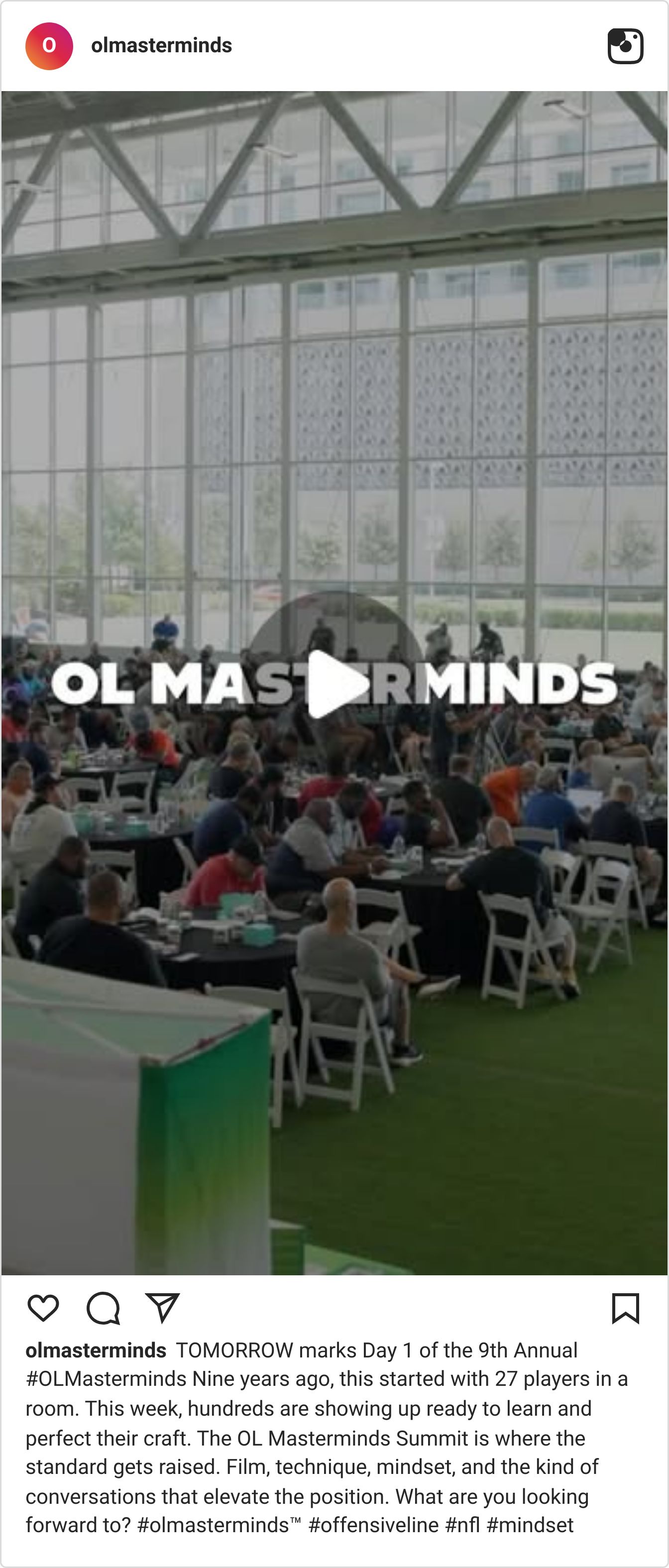
Last weekend in Frisco, Manyweather, alongside All-Pros and O-Line Mastermind Founding Members Lane Johnson and Terron Armstead, Mitchell Schwartz, Creed Humphrey, Rashawn Slater, Trey Smith, Zack Martin, Quinn Meinerz and Hall of Famer Jimbo Covert, as well as legends like Jesse Sapolu, Scott Wells, and others, held the ninth annual summit where drilling down on the fundamentals and techniques of offensive line play is the foundation for something much bigger for players who are fundamental to their team’s success.
“We’ve grown from 27 guys in a room,” Manyweather told Between The Hashmarks, of O-Line Mastermind’s 2018 beginnings. “Talking best practices, talking film breakdowns, and all that type of stuff, and it’s become kind of a brotherhood thing.
“Now, we’ve got a good deal of pro guys in the room, some elite pro guys, and there’s a lot of young NFL talent and a lot of up-and-coming, young, elite college players as well. It’s evolved from being just NFL guys in a room to the best of all worlds, which includes Hall of Famers, front office personnel, medical personnel, so it’s really become its own thing.”
Make no mistake about it, there weren’t any one-on-one drills being run at full speed or in full pads. This was a weekend in the laboratory.
It was all about the brightest minds to ever play offensive line, intensely focused on building the mind and body for peak performance in an ever-evolving yet somehow still underappreciated aspect of the sport.
In addition to breakout sessions where on-field drills and new techniques are coached, to seminars on the value and most effective ways to recover, Manyweather’s summits have become as vital a part of the calendar for offensive linemen as the training camps that are about to open in a matter of weeks.
And, lately, not just for players.
To Manyweather, expanding the knowledge base of the general managers who build the roster, the scouts who identify the talent, and the coaches who teach the position is becoming just as vital as imparting his wisdom onto the players who converge on Texas for the weekend.
“It’s three big things,” Manyweather says. “The first thing, is just going inside the psyche and the mentality of guys wanting to run the football, and how they want to run the football. We go over some of the common myths, and which things are coached for guys to do, versus what actually happens on tape.
“We also did the same thing, in essence, with the pass rush; how different pass rushes stress offensive lines, sets, and somethings we can do to combat that, with pre-identification and having built in responses and problem-solving in that regard.
“And, there’s also structuring drill work that stresses skill versus just doing drills that are mindless, as something like conditioning. I think that was a really big takeaway that I heard feedback from coaches and even some evaluators, like 'okay, that makes perfect sense, we may need to rethink how we’re structuring some of those drills to not only evaluate but also teach.’”
The hope, is that when coaches build out practice schedules this summer and into the fall, there’s far more of a focus on skill building rather than relying on how the position used to be coached. But, more importantly, that the players tasked with opening up the running lanes and keeping the quarterback upright are set up for optimal success.
“My whole thing was,” Manyweather says. “Whether you’re a college player, you’re a pro player, the name of the game is longevity and being able to recover. And, no matter if we’re talking about training, whether we’re talking about development, you should give more than it takes away from you.
“So, building in some of these lifestyle habits of recovery and longevity, I think is important, and I think that after this weekend, teams and coaches saw that too. Like, ‘holy shit, this is a different perspective of what I was expecting,’ and that was kind of the takeaway I got from people.”
Second Down: What to Make of the Chicago Bears?

David Banks-Imagn Images
Last season, maybe even a year ahead of schedule for just about everyone other than the most frequent visitors to Lou Malnati’s, the Chicago Bears took the NFC by storm.
There was the Black Friday victory in Philadelphia, gashing, thrashing, running all over and through the Eagles’ defense in an upset victory that caused the football world to stand up and take notice.
There was the 9-2 run, from an 0-2 start to 11-4 that included victories over the eventual playoff-bound Steelers, Eagles, and Packers over that stretch, and of course, Caleb Williams’ seven fourth-quarter comebacks and game-winning drives, in his second season, including bombastically erasing a 21-6 deficit to open the final frame in a comeback victory over the rival Packers in the NFC Wild Card round.
The Bears rode the league’s most opportunistic defense, and an ever-evolving offensive scheme that Ben Johnson seemed to fine-tune as the season went along, to Williams’ best traits and strengths, to Chicago’s first postseason victory since Barack Obama’s second January in office, before taking the Los Angeles Rams to the brink in overtime loss in the NFC Divisional Round.
If Chicago took the league by surprise, that’s not going to be the case in 2026.
“They will more than likely take a step back,” a rival quarterbacks coach tells Between The Hashmarks, on the condition of anonymity to speak freely about another team. “People have had a year to study them, they know some of Caleb’s tendencies. But, I still think they’ll be a good team.”

Subscribe to Between The Hashmarks to read the rest.
Become a paying subscriber of Between The Hashmarks to get access to this post and other subscriber-only content.
UpgradeA subscription gets you:
- Every 4 Downs Column Each Monday
- Every Football Friday Mailbag
- Complete Access to the Between The Hashmarks Huddle Community, including our chat